
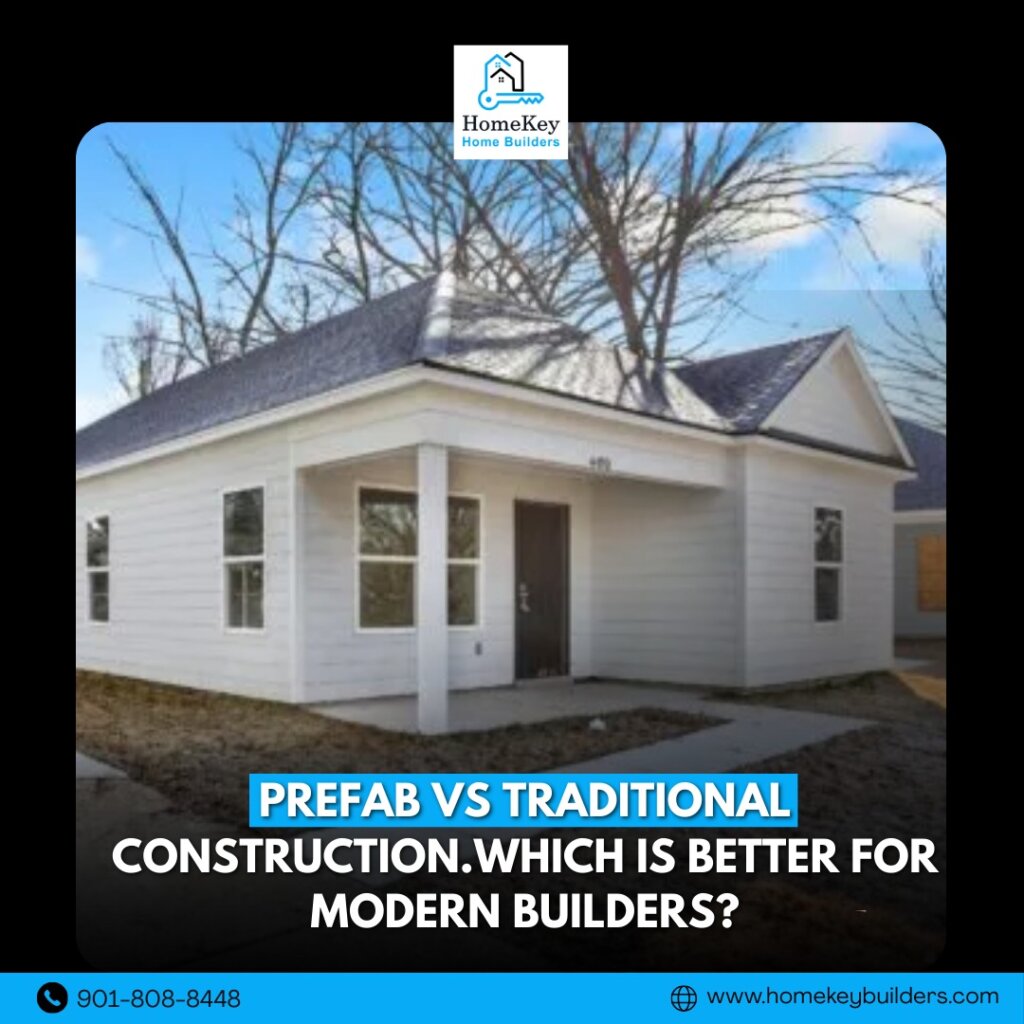
The construction industry is evolving rapidly as builders search for faster, more efficient, and cost-effective ways to deliver high-quality homes. Two popular construction methods dominate the discussion today: prefabricated (prefab) construction and traditional on-site construction.
Both approaches have their own advantages and challenges, and choosing the right one can significantly impact project timelines, costs, sustainability, and profitability. For modern builders looking to stay competitive in 2026 and beyond, understanding the differences between these methods is essential.
In this article, we explore prefab vs traditional construction, their benefits, drawbacks, and which approach might be better suited for modern builders.
What Is Prefabricated Construction?
Prefabricated construction, commonly called prefab, involves manufacturing building components in a factory setting and then transporting them to the construction site for assembly.
Instead of building everything from scratch on-site, prefab homes are created using pre-built panels, modules, or sections that are produced under controlled conditions.
Common Types of Prefab Construction
- Modular Homes – Entire sections of the home are built in a factory and assembled on-site.
- Panelized Construction – Wall panels, floors, and roof components are built in a factory and installed on-site.
- Pre-cut or Kit Homes – Materials are manufactured and cut beforehand, then assembled at the construction site.
Prefab construction has become increasingly popular due to its speed, efficiency, and reduced labor requirements.
What Is Traditional Construction?
Traditional construction refers to the conventional method where a home is built entirely on-site from the ground up. Builders bring raw materials to the site and construct each part of the home step by step.
This process typically involves:
- Site preparation
- Foundation construction
- Framing
- Roofing
- Electrical and plumbing installations
- Interior and exterior finishing
Traditional construction has been the standard for decades and offers maximum customization and flexibility.
Key Differences Between Prefab and Traditional Construction
1. Construction Speed
One of the biggest advantages of prefab construction is faster project completion.
Because prefab components are manufactured in factories while site work happens simultaneously, projects can move much quicker.
Prefab homes can often be completed 30–50% faster than traditional builds.
Traditional construction, on the other hand, may face delays caused by:
- Weather conditions
- Labor shortages
- Supply chain disruptions
For builders trying to scale operations or meet housing demand, prefab construction offers a significant time advantage.
2. Cost Efficiency
Cost is a major factor for any construction project.
Prefab construction can reduce costs through:
- Mass production of components
- Reduced material waste
- Lower labor requirements
- Shorter construction timelines
However, transportation and crane installation costs may increase the final price.
Traditional construction can sometimes be more expensive due to:
- Higher labor costs
- Material waste
- Longer project timelines
Still, in markets where skilled labor is available and materials are affordable, traditional methods can remain competitive.
3. Design Flexibility
Traditional construction offers greater design flexibility.
Builders can easily modify layouts, adjust materials, and make changes during the building process.
Prefab homes, while improving in design versatility, still rely on standardized modules and factory specifications.
That said, modern prefab manufacturers now offer a wide range of architectural designs that rival traditional homes.
4. Quality Control
Prefab construction is produced in controlled factory environments, which helps ensure consistent quality.
Benefits include:
- Precision manufacturing
- Reduced exposure to weather damage
- Standardized inspections and quality control
Traditional construction quality largely depends on site conditions and workforce experience, which can sometimes lead to inconsistencies.
5. Sustainability and Waste Reduction
Sustainability has become a key priority in modern construction.
Prefab construction is generally more environmentally friendly because factories can:
- Optimize material usage
- Recycle excess materials
- Reduce construction waste
Traditional construction often produces significantly more waste due to on-site cutting and adjustments.
For builders focused on energy-efficient homes and sustainable building practices, prefab construction offers clear advantages.
Advantages of Prefab Construction for Builders
Prefab construction provides several benefits for developers and construction companies:
- Faster project completion
- Lower labor costs
- Reduced material waste
- Improved quality control
- Predictable timelines
- Scalability for large developments
These advantages make prefab construction particularly attractive for build-to-rent communities, affordable housing projects, and large residential developments.
Advantages of Traditional Construction
Despite the rise of prefab methods, traditional construction remains highly relevant.
Its key advantages include:
- Full design customization
- Easier project modifications during construction
- Greater architectural flexibility
- Better adaptability for complex sites
Luxury homes and highly customized properties often rely on traditional building methods.
Challenges of Prefab Construction
Although prefab construction has many benefits, it also presents some challenges:
- Transportation logistics for large modules
- Limited customization in some cases
- Zoning and local building code restrictions
- Upfront manufacturing costs
Builders must carefully evaluate whether prefab solutions align with local regulations and project goals.
Challenges of Traditional Construction
Traditional construction also has its own limitations:
- Longer construction timelines
- Higher labor dependency
- Greater exposure to weather delays
- Increased material waste
These factors can impact profitability, especially in high-demand housing markets.
Which Construction Method Is Better for Modern Builders?
The answer depends on project type, market demand, and builder strategy.
Prefab construction is ideal for:
- Large-scale housing developments
- Build-to-rent communities
- Affordable housing projects
- Projects requiring faster delivery
Traditional construction works best for:
- Custom luxury homes
- Unique architectural designs
- Complex building sites
- High-end residential projects
Many modern builders are now adopting a hybrid approach, combining prefab components with traditional construction techniques to maximize efficiency and flexibility.
The Future of Construction
As technology continues to advance, prefab construction is expected to play a larger role in the housing industry.
Innovations such as:
- 3D printing
- advanced modular design
- smart construction technology
are transforming how homes are built.
However, traditional construction will continue to remain essential, especially for projects that require custom design and specialized craftsmanship.
Final Thoughts
Both prefab and traditional construction offer unique advantages for modern builders.
Prefab construction stands out for its speed, efficiency, and sustainability, while traditional construction provides unmatched flexibility and customization.
For builders looking to stay competitive in the evolving housing market, the best strategy may not be choosing one method over the other—but rather understanding how to leverage both approaches effectively.
As housing demand grows and technology continues to reshape the construction industry, builders who adapt to these innovations will be best positioned for long-term success.