
Building a new home or planning a major renovation is an exciting investment. However, without a realistic budget, even a well-designed project can become stressful. From material costs and labor expenses to permits and unexpected repairs, understanding your finances before construction begins is essential for keeping your project organized.
For homeowners planning a construction project in Memphis, TN, a detailed budget can help guide important decisions, prioritize features, and establish realistic expectations.
At HomeKey Home Builders, we believe successful construction starts with thoughtful planning, transparent communication, and a clear understanding of your project’s goals.
Why Is Budget Planning Important for Home Construction?
A construction budget does more than determine how much you can spend. It helps establish project priorities, compare material options, manage expenses, and make informed decisions throughout the building process.
Without a clear financial plan, homeowners may face unexpected costs, delays caused by funding gaps, or difficult decisions about reducing project features.
A well-prepared budget helps you:
- Establish realistic expectations before construction begins.
- Allocate funds to essential project requirements.
- Compare materials and design alternatives.
- Prepare for unexpected expenses.
- Communicate financial expectations with your builder.
- Track spending throughout construction.
Taking the time to plan your finances can make the construction process more manageable and predictable.
1. Define Your Project Scope Before Setting a Budget
The first step in home construction budget planning is identifying exactly what you want to build or renovate.
Are you planning a custom home, adding another room, remodeling a kitchen, or upgrading an existing property? Each project has different requirements, costs, and potential challenges.
Create a list of your essential features and optional upgrades. For example, structural requirements, necessary utilities, and functional living spaces may take priority over decorative finishes or luxury additions.
Defining your project scope early helps you estimate expenses more accurately and reduces the likelihood of costly changes later.
2. Understand the Main Home Construction Costs
A realistic construction budget should account for more than materials and labor. Depending on your property and project, several expenses may affect the overall investment.
Materials and supplies
Materials can include lumber, concrete, roofing, flooring, cabinetry, windows, insulation, fixtures, and finishing products. Prices vary depending on quality, availability, specifications, and supplier.
Compare suitable options based on durability, maintenance, and overall value rather than choosing materials solely by their initial price.
Labor and professional services
Construction may require carpenters, electricians, plumbers, designers, engineers, and other qualified professionals. Labor expenses depend on the project’s complexity, required expertise, and schedule.
A detailed estimate can help you understand which services are included in your proposed construction costs.
Permits and site preparation
Depending on the project, you may need permits, inspections, surveys, excavation, grading, drainage improvements, or utility connections. Confirm the requirements for your specific property and project before finalizing your budget.
Finishes and additional features
Cabinetry, countertops, lighting, flooring, landscaping, and other finishing details can significantly affect the final cost. Decide which features matter most to your lifestyle and allocate your budget accordingly.
3. Set Aside Funds for Unexpected Expenses
Even carefully planned construction projects can encounter unforeseen conditions. Material price changes, hidden structural problems, site conditions, or necessary design adjustments may affect costs.
Consider including a contingency allowance in your budget. The appropriate amount depends on the project’s scope, complexity, and uncertainty. Discuss a suitable reserve with your builder before construction begins.
Keeping contingency funds separate from your planned expenses can help you respond to unexpected situations without immediately sacrificing essential project features.
4. Choose Materials That Balance Quality and Cost
Saving money on construction does not necessarily mean choosing the cheapest available products. Materials should be evaluated based on their performance, durability, maintenance requirements, and suitability for the home.
For example, a durable flooring option may cost more initially but require less frequent replacement. Similarly, appropriate insulation and energy-efficient features may improve comfort and help manage energy use over time.
Discuss different material options with your builder and ask how each choice may affect upfront costs, maintenance, and long-term performance.
The goal is to make informed decisions that align with your budget without overlooking quality.
5. Plan for Changes Before Construction Begins
Design changes made after construction starts can affect material orders, labor schedules, and project costs.
Whenever possible, finalize major design decisions before work begins. Review layouts, specifications, finishes, and fixtures carefully so your builder can prepare a more accurate estimate.
If a change becomes necessary, ask for a written explanation of its cost and potential effect on the timeline before approving it.
A documented change-management process helps everyone understand the financial implications of project adjustments.
6. Compare Detailed Written Estimates
When evaluating home builders in Memphis, TN, request detailed written estimates rather than relying on a single total price.
A useful estimate should clearly identify the scope of work, anticipated materials, labor, exclusions, allowances, payment schedule, and other applicable costs.
When comparing estimates, make sure you are evaluating similar specifications. One proposal may appear less expensive because certain materials, services, or finishing work are excluded.
Ask questions about unclear items and confirm how unexpected expenses or additional work will be handled.
Choosing a builder based on transparency, relevant experience, and the full scope of services can be more valuable than selecting the lowest initial quote alone.
7. Track Your Spending Throughout the Project
Budget planning should continue after construction begins. Keep records of approved estimates, invoices, payments, material purchases, and change orders.
Review spending regularly with your builder to understand how actual costs compare with the original budget. If an expense changes, discuss the impact promptly and determine whether adjustments are needed elsewhere.
Consistent financial reviews can help you identify potential issues early and make decisions before they become more difficult to manage.
How HomeKey Home Builders Can Help
At HomeKey Home Builders, we understand that construction is a significant financial commitment. Clear planning and communication can help homeowners approach their projects with greater confidence.
We focus on thoughtful construction planning, quality craftsmanship, and helping clients understand the decisions involved in their projects.
Whether you are considering a new home or planning a residential construction project in Memphis and surrounding areas, starting with a clear vision and realistic budget is an important first step.
Frequently Asked Questions About Home Construction Budgets
How do I create a budget for building a home?
Start by defining the project scope, estimating materials and labor, accounting for permits and site preparation, selecting finishes, and setting aside funds for unexpected expenses.
What costs should I include in a home construction budget?
Depending on the project, include materials, labor, design and engineering services, permits, site preparation, utilities, finishes, and contingency funds.
Why should I request a written construction estimate?
A written estimate outlines the expected work and associated costs, making it easier to compare proposals and clarify what is included before construction begins.
How can I avoid going over my construction budget?
Finalize major design decisions early, establish a contingency allowance, compare detailed estimates, document changes, and review spending regularly.
How do I find a home builder in Memphis, TN?
Research local builders, review relevant projects and references, verify applicable credentials and insurance, and compare written estimates based on scope, quality, and communication.
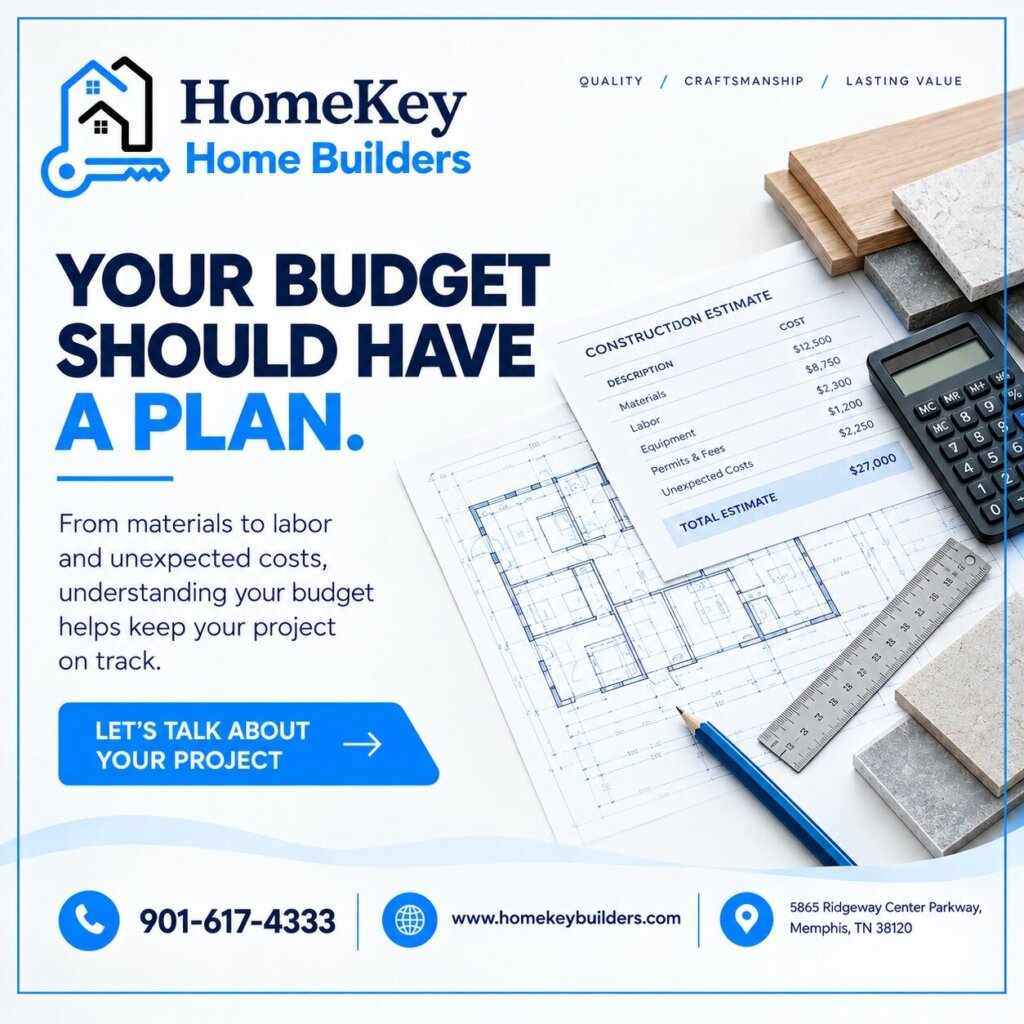
Conclusion: Build With a Budget and a Plan
A successful home construction project begins with more than a design. It requires a realistic budget, careful cost planning, informed material choices, and clear communication with your builder.
By understanding your expenses and preparing for potential changes, you can make more confident decisions throughout the construction process.
Ready to discuss your next construction project?
Contact HomeKey Home Builders to start planning your vision.
Phone: 901-617-4333
Website: https://www.homekeybuilders.com
Address: 5865 Ridgeway Center Parkway, Memphis, TN 38120
Plan wisely. Build with confidence. Create lasting value.