Building a custom home is an exciting journey, but many homeowners focus only on the base construction price and overlook additional expenses that can significantly affect their budget. Understanding these hidden costs before construction begins can help you avoid financial surprises and keep your project on track.
If you’re planning to build a home in Memphis, working with an experienced builder and creating a realistic budget are two of the best ways to ensure a successful project.
In this guide, we’ll explore the most common hidden costs of building a home in Memphis and share practical tips to help you plan with confidence.
Why Hidden Costs Matter
The advertised cost per square foot often covers only the structure itself. Several additional expenses can arise before, during, and after construction.
Being aware of these costs allows you to:
- Create a realistic budget
- Reduce unexpected expenses
- Avoid construction delays
- Make informed decisions
- Protect your investment
Planning ahead is one of the smartest investments you can make.
1. Land Purchase and Site Preparation
Before construction begins, the property must be ready for building.
Site preparation may include:
- Land clearing
- Tree removal
- Excavation
- Grading
- Soil testing
- Drainage improvements
If the lot has uneven terrain or poor soil conditions, preparation costs can increase.
Tip
Ask your builder for a detailed site evaluation before purchasing land.
2. Building Permits and Inspection Fees
Every new home requires permits and inspections to ensure compliance with local building codes.
These may include:
- Building permits
- Electrical permits
- Plumbing permits
- Mechanical permits
- Final occupancy inspections
Permit costs vary depending on the size and scope of the project.
Working with a knowledgeable local builder helps simplify this process.
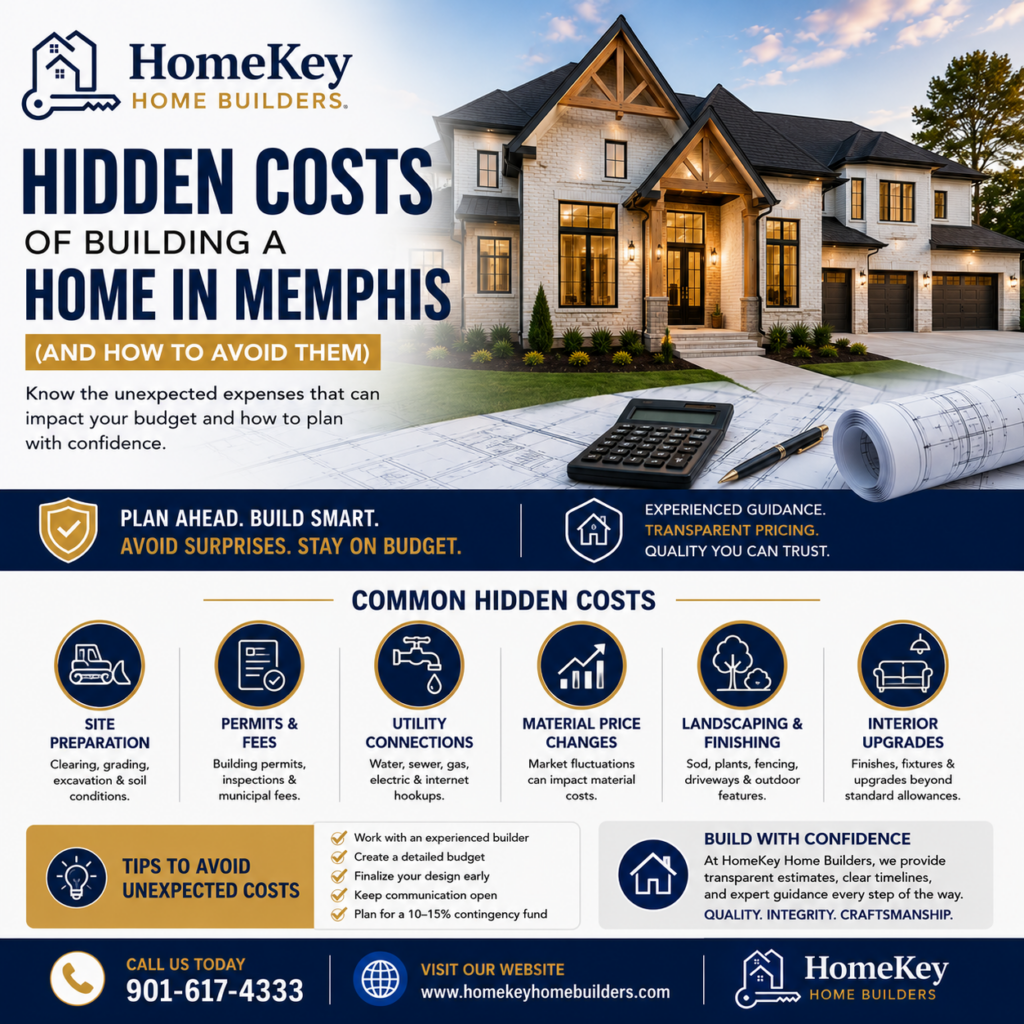
3. Utility Connections
Connecting your home to essential utilities is another expense many homeowners overlook.
Potential costs include:
- Water connection
- Sewer connection
- Electrical service
- Natural gas installation
- Internet and cable setup
If your property is located outside established neighborhoods, utility installation costs may be higher.
4. Material Price Fluctuations
Construction material prices can change throughout the year due to supply chain conditions and market demand.
Examples include:
- Lumber
- Roofing materials
- Windows
- Cabinets
- Flooring
- Insulation
Choosing materials early and working with an experienced builder can help minimize pricing surprises.
5. Design Changes During Construction
Making changes after construction has started can lead to additional expenses and project delays.
Examples include:
- Moving walls
- Changing flooring
- Upgrading cabinets
- Adding windows
- Expanding rooms
Finalizing your design before construction begins is the best way to avoid costly change orders.
6. Landscaping and Exterior Features
Many homeowners focus on the house itself but forget about completing the outdoor space.
Additional costs may include:
- Sod installation
- Trees and shrubs
- Irrigation systems
- Fencing
- Driveways
- Walkways
- Outdoor lighting
- Patios
A finished landscape not only enhances curb appeal but also adds value to your home.
7. Interior Upgrades
Builder allowances may cover standard finishes, but many homeowners choose upgrades during construction.
Popular upgrades include:
- Quartz countertops
- Hardwood flooring
- Custom cabinetry
- Premium lighting
- Smart home technology
- Luxury appliances
While these features improve comfort and resale value, they should be included in your budget from the beginning.
8. Temporary Living Expenses
If you’re waiting for your new home to be completed, you may need temporary accommodations.
These costs can include:
- Rental payments
- Storage units
- Moving services
- Utility deposits
Planning your construction timeline carefully can help reduce these expenses.
9. Furniture and Window Treatments
A new home often inspires homeowners to purchase new furnishings.
Common post-construction expenses include:
- Living room furniture
- Bedroom sets
- Dining furniture
- Window blinds
- Curtains
- Area rugs
- Decorative lighting
While not part of construction, these costs should be considered in your overall budget.
10. Emergency Contingency Fund
Unexpected expenses can occur during any construction project.
Industry experts recommend setting aside 10–15% of your total budget as a contingency fund.
This provides financial flexibility if unexpected conditions arise.
Tips to Stay Within Budget
Keeping your project on budget starts with smart planning.
Work With an Experienced Builder
A professional builder can identify potential cost factors early and provide accurate estimates.
Finalize Your Design Early
Avoid major changes once construction begins.
Prioritize Your Must-Have Features
Focus your budget on the features that matter most to your family.
Review Your Contract Carefully
Make sure you understand what is included and what may require additional costs.
Maintain Open Communication
Regular updates with your builder help address issues before they become expensive problems.
Why Choose HomeKey Home Builders?
At HomeKey Home Builders, we believe homeowners deserve honest guidance and transparent pricing throughout the building process.
Our team works closely with every client to provide:
- Detailed project planning
- Clear communication
- Quality craftsmanship
- Transparent estimates
- Personalized home designs
- Professional project management
Our goal is to help you build your dream home without unnecessary surprises.
Frequently Asked Questions
What hidden costs should I expect when building a home?
Common hidden costs include site preparation, permits, utility connections, landscaping, design changes, and material price fluctuations.
How much extra should I budget?
Many builders recommend setting aside 10–15% of your total construction budget for unexpected expenses.
Can hidden costs be avoided?
While some expenses are unavoidable, careful planning and working with an experienced builder can significantly reduce unexpected costs.
Why do material prices change?
Construction material prices are influenced by supply chain conditions, demand, transportation costs, and market trends.
Why choose HomeKey Home Builders?
We provide transparent communication, detailed planning, and quality craftsmanship to help homeowners build with confidence.
Final Thoughts
Building a custom home is one of the most rewarding investments you can make, but understanding the hidden costs involved is essential for a successful project. By planning ahead, establishing a realistic budget, and partnering with a trusted builder, you can avoid unnecessary surprises and enjoy a smoother construction experience.
At HomeKey Home Builders, we’re committed to making the home-building process as transparent and stress-free as possible. From the initial consultation to the final walkthrough, we’re here to help you build with confidence.
Ready to start your custom home journey?
📞 901-617-4333