Building a custom home is an exciting opportunity to create a space designed around your lifestyle, needs, and long-term goals. But a successful custom home doesn’t begin when construction starts—it begins with thoughtful planning.
From defining your goals and creating a functional floor plan to selecting materials and preparing for construction, every decision can affect the final result.
If you’re planning a custom home in Memphis, understanding the process before construction begins can help you make better decisions, manage your budget, and create a home you’ll enjoy for years to come.
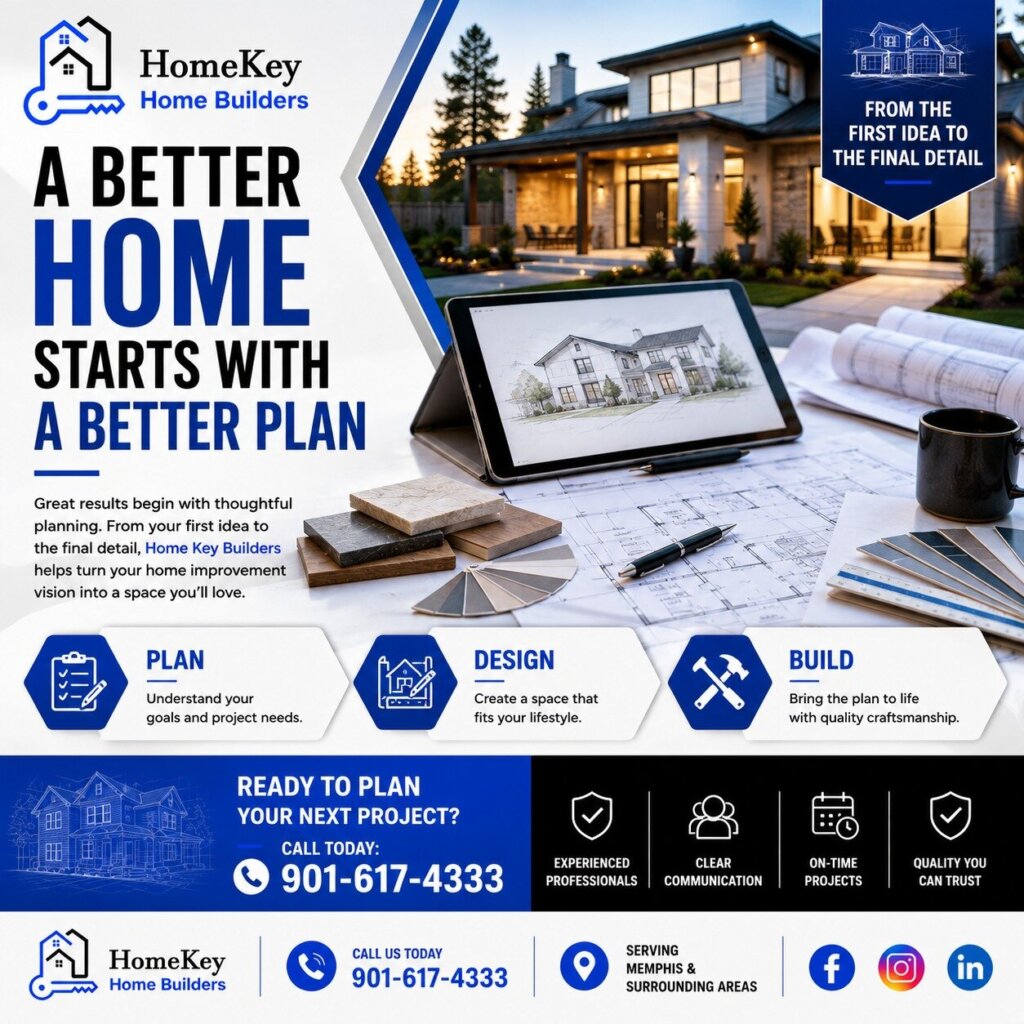
At HomeKey Home Builders, we believe a better home starts with a better plan.
Why Planning Matters When Building a Custom Home
A custom home gives you more flexibility than buying an existing property, but it also means there are more decisions to make.
Good planning can help you:
- Create a home that fits your lifestyle
- Make better use of available space
- Establish realistic project expectations
- Select materials more confidently
- Reduce unnecessary changes during construction
- Keep your project organized from start to finish
The goal isn’t simply to build a beautiful house. It’s to create a home that works for the way you actually live.
1. Define Your Goals Before Designing Your Home
Before choosing finishes or discussing floor plans, think about what you want from your new home.
Ask yourself:
- How many bedrooms do you need?
- How many bathrooms would be ideal?
- Do you need a home office?
- Do you want an open-concept living area?
- Will you need additional storage?
- Do you want outdoor living space?
- Are you planning for your family to grow?
- Do you expect to live in the home long term?
Creating a list of priorities helps your builder and design team understand what matters most to you.
2. Establish a Realistic Custom Home Budget
Your budget is one of the most important parts of the planning process.
A custom home budget may involve much more than the basic construction cost. Depending on your project, you may also need to consider:
- Land or lot costs
- Site preparation
- Architectural and design services
- Permits and fees
- Construction materials
- Labor
- Appliances
- Landscaping
- Driveways and exterior improvements
- Interior finishes
Establishing your priorities early allows you to determine where you want to invest more and where you may want to simplify.
3. Choose the Right Location and Lot
The location of your custom home can influence its design, cost, and long-term usability.
Before purchasing or developing a lot, consider:
- Lot size
- Property access
- Site conditions
- Drainage
- Utility availability
- Neighborhood requirements
- Orientation of the home
- Desired outdoor spaces
A lot that looks perfect at first may have site-specific considerations that affect construction. Understanding the property before finalizing your plans can help prevent surprises later.
4. Create a Functional Custom Home Floor Plan
A beautiful home should also be functional.
When developing your custom home design in Memphis, think about how you’ll move through the house every day.
Consider relationships between spaces such as:
- Kitchen and dining area
- Kitchen and living room
- Primary bedroom and bathroom
- Bedrooms and laundry room
- Garage and mudroom
- Indoor and outdoor living areas
Good floor planning can improve comfort, privacy, storage, and everyday convenience.
5. Plan for Your Future Lifestyle
A custom home should work for more than just today.
Think about how your needs may change over the next several years.
You might want to plan for:
- A growing family
- Working from home
- Aging in place
- Additional storage
- Guest accommodations
- Flexible rooms
- Future outdoor improvements
Planning ahead can help ensure your home continues to meet your needs as your lifestyle changes.
6. Select Materials and Finishes Carefully
Once your layout is established, you’ll begin making decisions about the home’s finishes.
These can include:
Interior Materials
- Flooring
- Cabinets
- Countertops
- Paint
- Doors
- Lighting
- Plumbing fixtures
Exterior Materials
- Roofing
- Siding
- Brick
- Stone
- Windows
- Exterior doors
Choose materials based not only on appearance but also on durability, maintenance, functionality, and your overall budget.
7. Think About Energy Efficiency
Energy-efficient features can improve comfort and potentially reduce ongoing household energy use.
Depending on your design and budget, you may consider:
- Efficient HVAC equipment
- Quality insulation
- Energy-efficient windows
- LED lighting
- Smart thermostats
- Efficient appliances
- Proper air sealing
Discuss these options during the planning stage rather than waiting until construction is underway.
8. Plan Your Outdoor Living Space
Your home’s design shouldn’t stop at the exterior walls.
Outdoor spaces can become an important extension of your living area.
Consider incorporating:
- Covered patios
- Outdoor kitchens
- Seating areas
- Fire features
- Landscaping
- Walkways
- Private backyard spaces
Planning these features alongside your home design can create a more cohesive property.
9. Work With an Experienced Custom Home Builder
Choosing the right builder is one of the most important decisions you’ll make.
Look for a builder who offers:
- Clear communication
- Detailed project planning
- Quality craftsmanship
- Transparent expectations
- Professional project management
- Experience with custom construction
A strong relationship between the homeowner and builder can make the entire construction process more organized and enjoyable.
10. Understand the Construction Process
Once planning and design are complete, construction can begin.
While every project is different, the process generally progresses through stages such as:
Planning → Design → Site Preparation → Foundation → Framing → Exterior Construction → Interior Systems → Finishes → Final Details
Understanding these stages helps you know what to expect as your custom home takes shape.
Common Mistakes to Avoid When Planning a Custom Home
Even small planning mistakes can create unnecessary challenges later.
Try to avoid:
Changing Major Plans Too Late
Major changes during construction can affect the timeline and budget.
Focusing Only on Appearance
A beautiful home still needs to function well for your daily lifestyle.
Ignoring Storage
Closets, pantry space, garage storage, and built-ins should be considered early.
Underestimating Lighting
Natural and artificial lighting can significantly affect how a home feels.
Forgetting Future Needs
Think beyond your current lifestyle when making long-term design decisions.
Choosing Materials Without Considering Maintenance
A material may look great but require more maintenance than you’re prepared to handle.
Why a Better Plan Creates a Better Home
The strongest custom home projects start with careful planning.
When your goals, floor plan, budget, materials, and construction expectations are aligned before work begins, the building process becomes much easier to manage.
At HomeKey Home Builders, we help homeowners turn ideas into thoughtfully planned spaces designed around their lifestyles and goals.
From the first idea to the final detail, our focus is on quality craftsmanship, clear communication, and a professional building experience.
Frequently Asked Questions About Custom Home Planning
How early should I start planning a custom home?
It’s best to begin planning before construction. Establishing your goals, budget, lot requirements, floor plan, and material preferences early can help create a smoother project.
What should I consider before building a custom home?
Consider your budget, lot, floor plan, lifestyle needs, future plans, materials, energy efficiency, and the builder you want to work with.
How do I choose a custom home builder in Memphis?
Look for a builder with relevant experience, strong communication, quality workmanship, clear expectations, and a professional approach to project management.
Can I customize the floor plan?
Yes. One of the primary benefits of custom home construction is the ability to create a layout based on your lifestyle, preferences, and property.
What is the first step in building a custom home?
The first step is defining your goals and establishing a realistic budget. From there, you can evaluate your lot, develop your design, and begin working with your builder.
Build Your Memphis Home With a Better Plan
Building a custom home is a major investment, and thoughtful planning can make a significant difference in the final result.
From choosing the right lot and creating a functional floor plan to selecting materials and preparing for construction, every stage matters.
If you’re considering building a custom home in Memphis, HomeKey Home Builders is ready to help turn your vision into a thoughtfully planned home.
HomeKey Home Builders
📞 901-617-4333
A better home starts with a better plan.